


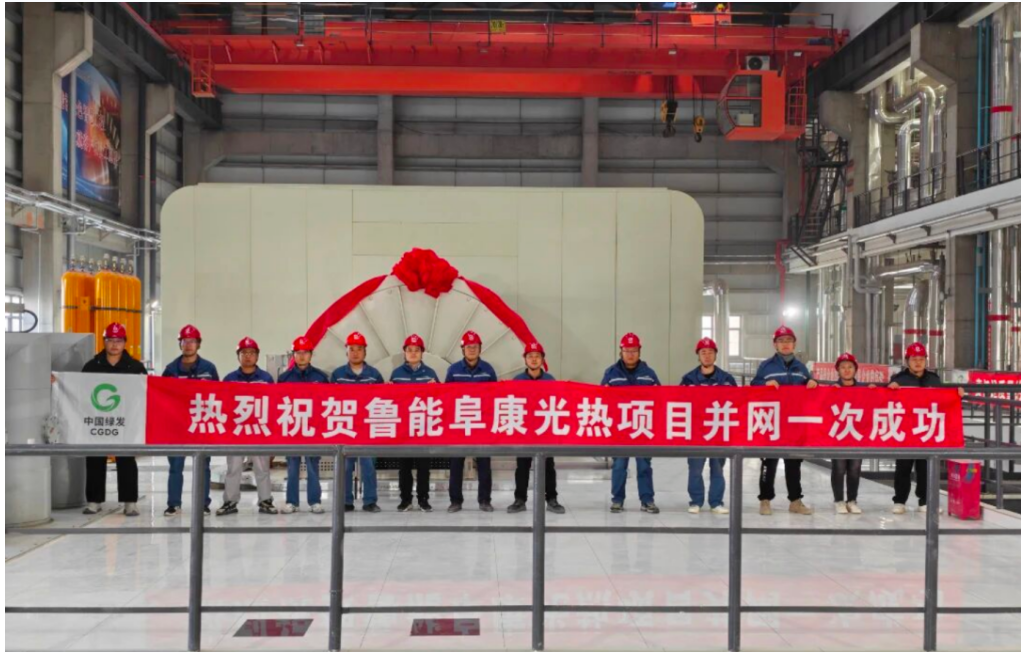
At 9:21 a.m. on October 30, 2026, the 100 MW solar thermal project of CGDG's Fukang Multi-Energy Complementary (and Market-Based Grid Connection) Project in Xinjiang was successfully connected to the grid and began generating power. This marks the official entry of CGDG's first solar thermal project in Xinjiang into the trial operation phase, providing a "green stabilizer" with flexible peak-shaving and sustained output capability for the Fukang million-kilowatt multi-energy complementary base.
The project adopts domestically developed tower molten salt CSP technology, equipped with an 8-hour long-duration molten salt thermal energy storage system. The heliostat field consists of 15,697 heliostats with a total aperture area of approximately 580,000 square meters, and the solar receiver tower stands 236 meters tall. After commissioning, the project is expected to generate 120 million kWh of electricity per year, saving approximately 40,000 tonnes of standard coal annually and reducing carbon dioxide emissions by about 140,000 tonnes per year, delivering outstanding ecological and emission-reduction benefits.
The Fukang million-kilowatt multi-energy complementary base project comprises a 100 MW solar thermal project and a 900 MW photovoltaic project. Through the "solar thermal + photovoltaic" multi-energy complementary model, it can achieve 24-hour uninterrupted power generation, and both projects have now been connected to the grid. As the first solar thermal project in Changji Prefecture, Xinjiang, upon commissioning it will leverage its long-duration energy storage characteristics to serve as a high-quality peak-shaving power source, continuously improving the regional accommodation level of renewable energy, promoting the green transformation of the energy structure, supporting the development of Xinjiang's new-type power system, and injecting strong momentum into the steady achievement of the "dual carbon" goals.