


Under the "dual carbon" goals, the Concentrated Solar Power (CSP) and photovoltaic (PV) industries commonly face challenges including equipment protection difficulties, high operation and maintenance costs, and power generation efficiency degradation. Guangzhou Sysmyk New Material Technology Co., Ltd. (Xisenmeike) has recently officially joined the China Solar Thermal Alliance (CSTA), and will collaborate with alliance members to conduct technical research and jointly establish standards, promoting high-quality development of the solar industry.
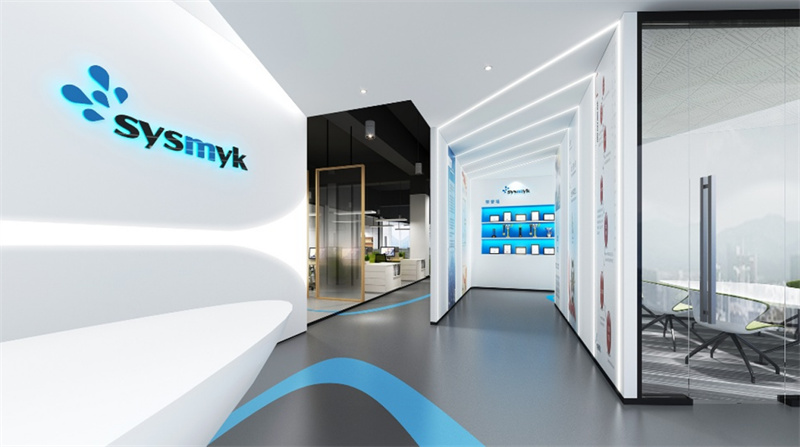
Xisenmeike is a specialized, refined, distinctive, and innovative high-tech enterprise in Guangdong Province, with a research and development team of master's and doctoral degree holders and over 50 invention patents. Its self-developed third-generation multifunctional nano-coating offers two customizable solutions: super-hydrophilic and super-hydrophobic, adaptable to various solar energy scenarios. It enables self-cleaning and anti-reflective properties, increasing light transmittance by 5%–10%; provides long-term weather resistance to delay equipment aging; and comes with standardized construction processes applicable to both new component coating and existing power station retrofitting, without affecting normal power generation. The coating is also suitable for the CSP industry, capable of improving the reflectivity of concentrating mirrors, protecting receiver tubes and thermal storage devices, and extending equipment service life.
The related technologies have been validated in various extreme operating conditions. The dedicated coating for power stations in the Gobi Desert of Northwest China can reduce cleaning workload by over 70%, withstand temperature differences, and resist peeling and yellowing. The anti-bird-dropping photocatalytic coating can prevent component corrosion and hot spot failures. For industrial and commercial scenarios with dust and oil contamination, the coating can significantly reduce dirt adhesion, with light transmittance restored by simple water rinsing. The company's new energy construction area exceeds 600,000 square meters, and its retrofitting scale for existing power stations ranks among the top in the industry.
In terms of industry-university-research collaboration, the company has jointly developed coating technologies with the University of Chinese Academy of Sciences, led the formulation of two group standards for the PV industry, completed Series B+ financing, and expanded its business to multiple countries, forming a full-chain layout covering component supporting services and power station technical retrofitting.
The Solar Thermal Industry Technology Innovation Strategic Alliance (CSTA), led by the Institute of Electrical Engineering of the Chinese Academy of Sciences, brings together industry enterprises, universities, and research institutes, focusing on technological innovation across the entire CSP industry chain. After joining the alliance, Xisenmeike will carry out four types of cooperation: jointly developing new-generation protective coatings such as mirror self-cleaning and near-infrared reflection coatings; expanding CSP and PV applications through alliance channels into marine engineering and high-end manufacturing; integrating upstream and downstream resources to accelerate the industrialization of new technologies by keeping pace with industry developments; and participating in industry exchanges and standard formulation, sharing extreme environment operation and maintenance experience, and working together to address common industry challenges such as dust accumulation and efficiency degradation.
Going forward, the company will leverage the alliance platform to promote the standardization of nano-coating technology, contribute to carbon reduction and efficiency improvement in new energy through low-cost and high-efficiency protection solutions, and build a long-lasting, low-carbon operation and maintenance system for CSP and PV.