


On July 10, the Solar Thermal Power Committee of Chinese Renewable Energy Society and the China Solar Thermal Alliance (CSTA) organized a delegation of over twenty representatives from government, enterprises, universities, and research institutes to conduct an industrial survey in Xiaozhongdian Town, Shangri-La City, Yunnan Province. The survey team visited the Yunnan Normal University Shangri-La Tibetan Medicinal Materials Science and Technology Courtyard, the Shangri-La Zhonghao Chinese Medicinal Materials Planting Co., Ltd. Solar-Coupled Heat Pump Tibetan Medicine Drying Demonstration Base, and the Solar Thermal Storage and Heating High-Altitude Protected Agriculture Demonstration Base. A thematic symposium on high-altitude solar thermal utilization was also held.
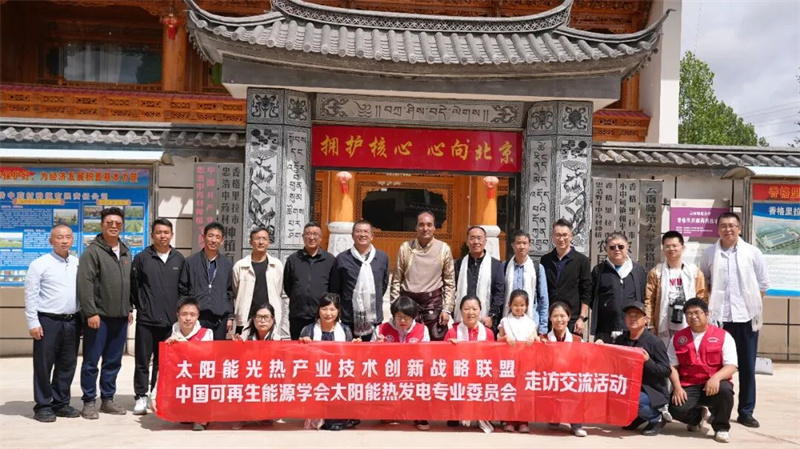
This survey focused on the integrated development of solar thermal technology and deep processing of Tibetan medicines. The delegation was led by Liu Luping, Vice Chairman of CSTA, and Du Fengli, Secretary-General, with participants from the University of Science and Technology of China, the Institute of Electrical Engineering of the Chinese Academy of Sciences, the Diqing Prefecture Science and Technology Bureau, the Diqing Prefecture Association for Science and Technology, the Diqing Prefecture Agriculture and Rural Affairs Bureau, Inner Mongolia LENON NEW ENERGY, and POWERCHINA GUIYANG ENGINEERING CORPORATION LIMITED. They were accompanied by Professor Li Ming (Second-Level Professor) and Professor Wang Yunfeng of Yunnan Normal University, as well as Song Jianzhong, General Manager of Shangri-La Zhonghao Chinese Medicinal Materials Planting Co., Ltd.
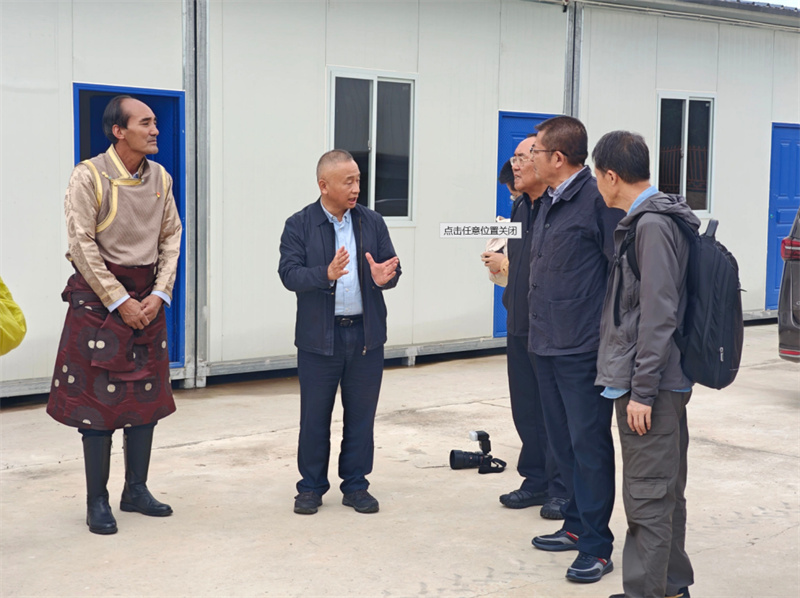
Shangri-La is a renowned high-altitude medicinal materials region, with an annual output of 47,600 tons of Tibetan medicinal materials and an annual industry output value of 843 million yuan. The local cold and high-altitude climate means that traditional open-air sun drying requires 90 days, leading to the loss of active medicinal ingredients and inconsistent quality. To address this, Professor Li Ming's team at Yunnan Normal University established the nation's first Tibetan medicine science and technology courtyard in a high-altitude Tibetan region, equipped with a solar-coupled heat pump drying facility. The courtyard was officially accredited by the National Association of Agricultural Technology Extension on July 3, 2026. With cumulative investment exceeding 2 million yuan and annual research funding of 100,000 yuan each from university and local expert workstations, the courtyard has been cultivating industrial technical talent for years, forming an integrated model of scientific research, talent development, and social service.
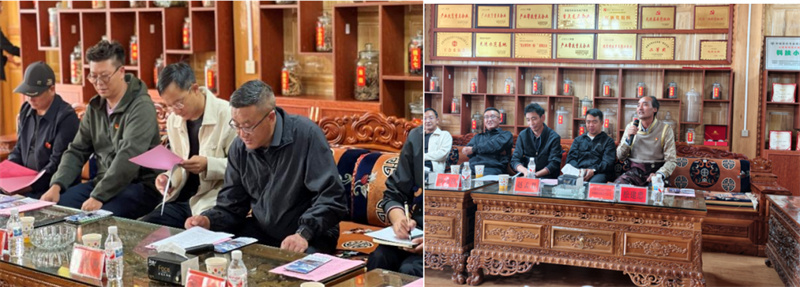
The team independently developed a high-temperature CO₂ heat pump drying system adapted to low-temperature environments as cold as minus 10°C, enabling constant-temperature drying at 70°C. The drying cycle has been compressed from 90 days to 3 days, production costs have been reduced by 60%, and energy savings reach 66.3% compared to conventional heat pumps. The facility processes 1,500 tons of medicinal materials annually, effectively resolving multiple pain points in the industry. Zhao Hongkun, Deputy Director of the Diqing Prefecture Science and Technology Bureau, stated that the local government will introduce supportive policies to promote the coverage of solar thermal technology across the entire Tibetan medicine industry chain, creating a replicable model for high-altitude industries.
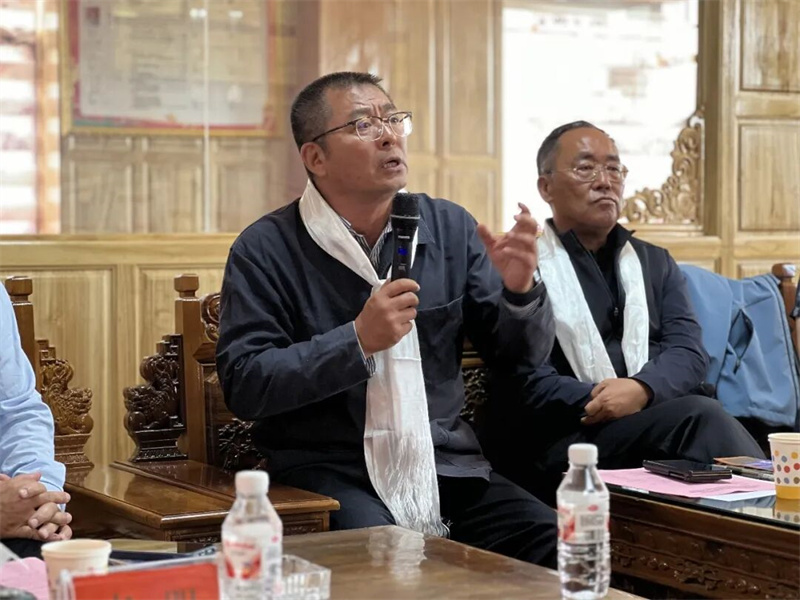
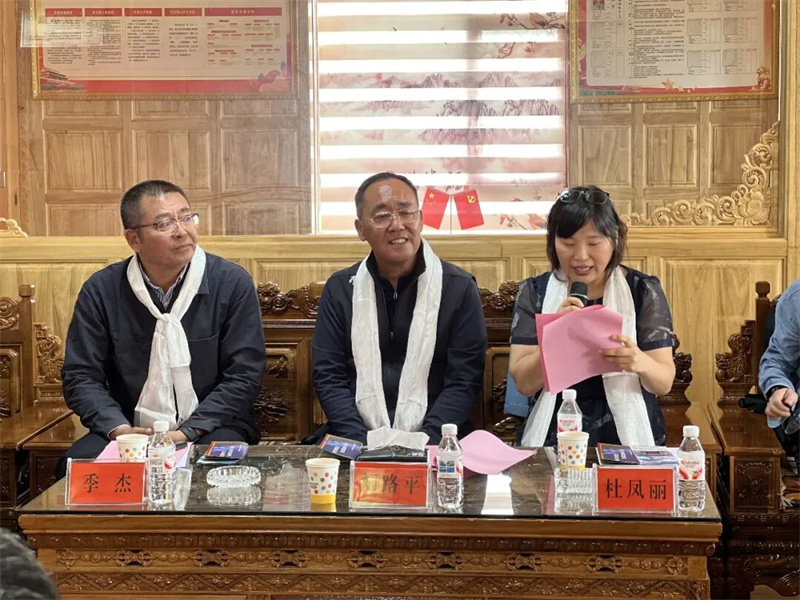
The symposium centered on discussions of solar thermal-empowered high-altitude characteristic agriculture. Ji Jie, Chair Professor at the University of Science and Technology of China, affirmed the technology courtyard's model of transforming research achievements into practical applications, recommending deeper government-enterprise-university cooperation, the development of photovoltaic-thermal integrated equipment, and customized temperature-controlled processing techniques based on the characteristics of different medicinal materials. Participants reached a consensus: distributed photovoltaic-thermal integration represents the optimal clean energy solution for the region, applicable to scenarios such as medicinal material processing and residential heating, thereby building a collaborative development system involving government, enterprises, and universities.
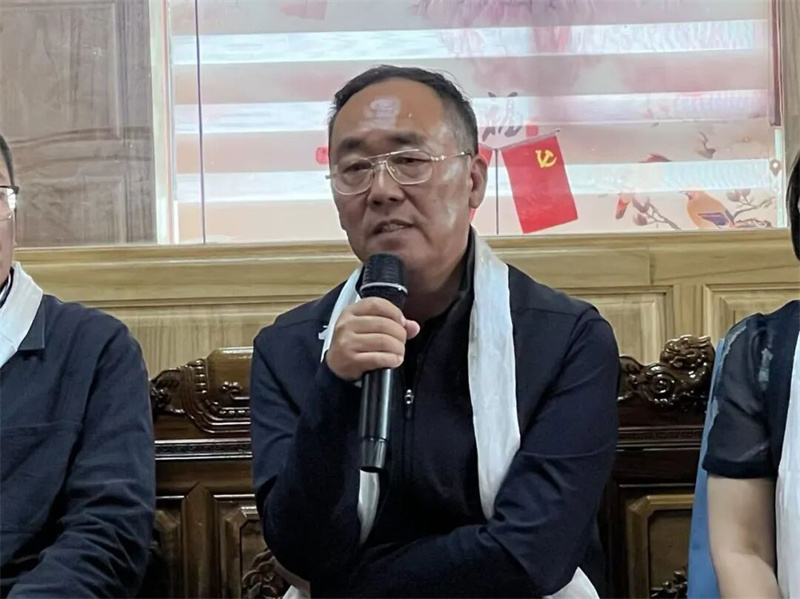
Liu Luping, Vice Chairman of CSTA, concluded that local medicinal materials such as Qinjiao and Muxiang currently have planting areas of two to three thousand mu, with the potential to expand to ten thousand mu. However, the industry remains at the stage of raw material export. CSTA will establish a regular exchange platform, collaborate with all parties to tackle low-temperature drying and high-altitude heating technologies, implement demonstration projects, and improve the entire Tibetan medicine industry chain. Through new energy technologies, CSTA aims to support the low-carbon upgrading of characteristic industries in Tibetan regions and contribute to the goals of rural revitalization and carbon peaking and carbon neutrality.