


To establish a collaborative innovation channel across the entire solar thermal power generation industry chain and address core industry challenges including cost reduction and efficiency improvement in solar collector field systems and long-term stable operation and maintenance of power plants, on July 2, 2026, the China Solar Thermal Alliance (CSTA) and the Solar Thermal Power Committee of Chinese Renewable Energy Society organized relevant institutional representatives to visit SEPCOIII Electric Power Construction Co., Ltd. (SEPCOIII) for research and investigation, while simultaneously holding a thematic symposium on key technologies for solar collector fields and commissioning, operation, and maintenance of solar thermal power plants. This event was led by Wang Haoyi, Vice Chairman of CSTA and Director of the Onshore Energy Division of the New Energy Research Institute of the Hydropower and Water Resources Planning and Design General Institute. It brought together over 30 representatives from across the industry chain, including solar thermal engineering EPC contractors, core equipment manufacturers, molten salt medium material suppliers, measurement and control instrument providers, and research institutes. The event centered on on-site visits to the corporate exhibition hall, thematic presentations by SEPCOIII, and in-depth discussions across the entire industry chain, conducting systematic exchanges on EPCO full-chain solutions, benchmark project engineering practices at home and abroad, as well as key technologies for solar collector fields and commissioning, operation, and maintenance technologies for solar thermal power plants.
Participants visited the corporate exhibition hall to gain an intuitive understanding of SEPCOIII's global energy layout and core equipment such as complete heliostat systems and intelligent cluster control systems, fully demonstrating the company's rare full-chain EPCO engineering capabilities in CSP , as well as its development history and corporate honors. Subsequently, a thematic symposium was convened, hosted by Du Fengli, Secretary-General of CSTA and the Solar Thermal Power Committee of Chinese Renewable Energy Society.
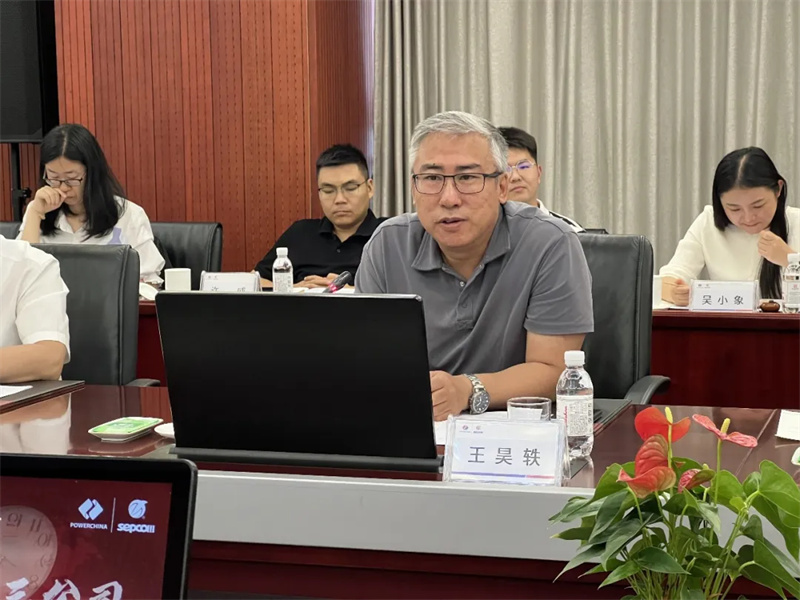
Vice Chairman Wang Haoyi provided an in-depth interpretation of the current state of China's solar thermal industry and its development path during the 15th Five-Year Plan period. China's solar thermal industry has progressed through technology exploration and demonstration construction phases and has now entered a market-oriented, large-scale transformation period. With the commencement of the 15th Five-Year Plan cycle, the construction of a 350,000-kilowatt large-scale independent solar thermal project in Qinghai is underway, with grid connection expected in 2028, which will reshape the industry's development landscape. Currently, two core policies (No. 136 and No. 1645) have been implemented, marking the industry's complete exit from the subsidy era and full transition to market orientation. Solar thermal power generation, serving as a supplementary regulation and support power source in Northwest China, has a clear development target of reaching tens of millions of kilowatts in installed capacity. He noted that the industry currently faces pain points including insufficient total solar thermal project capacity, significant cost reduction pressure, and weak industry chain driving force. The entire industry chain must rely on market-oriented revenues for survival. Healthy low-price competition can drive cost reduction through technology, but quality should not be compromised through excessive internal competition. During the 15th Five-Year Plan period, solar thermal power will fully benchmark against coal-fired power technology and policy systems, rely on the layout of large-scale projects in Northwest China's clean energy bases, high-quality implementation of the Qinghai benchmark project, and strive to achieve the large-scale development target of tens of millions of kilowatts.
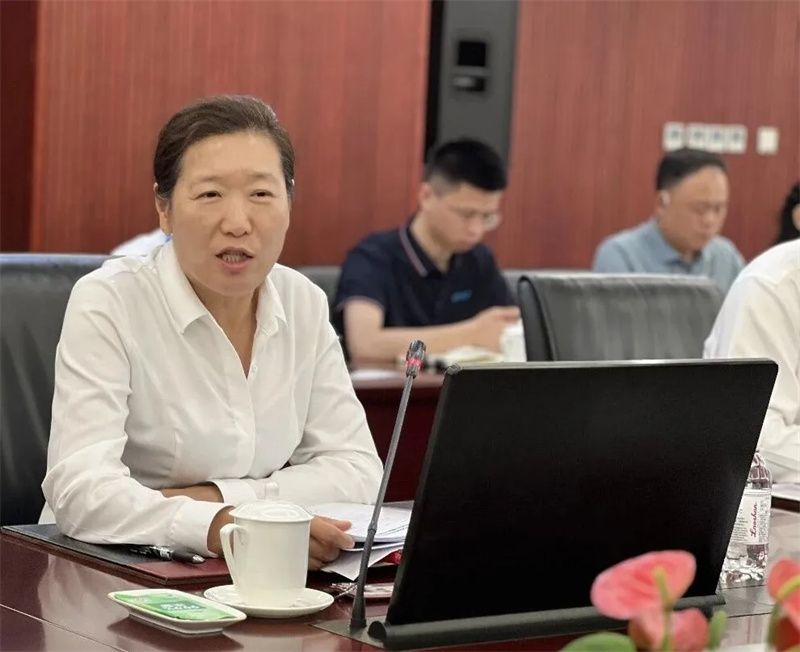
Dai Zengli, Member of the Party Committee, Deputy General Manager, and Chief Engineer of SEPCOIII, expressed gratitude in her welcome address to Wang Zhifeng, Chairman of CSTA, Wang Haoyi, and other leaders for witnessing the launch of the "Precision in Wind, New Realm in Manufacturing" ultra-high wind-resistant, high-precision heliostat flexible assembly line and the commissioning ceremony of the assembly workshop. She described this as a milestone moment in intelligent manufacturing for solar thermal equipment and an important achievement in the industry's collective efforts to advance industrial implementation. She stated that domestic solar thermal manufacturing processes and equipment levels have caught up with or even surpassed international standards, with prominent local technological advantages, and called for deepened collaboration across the industry chain to jointly promote industrial implementation.
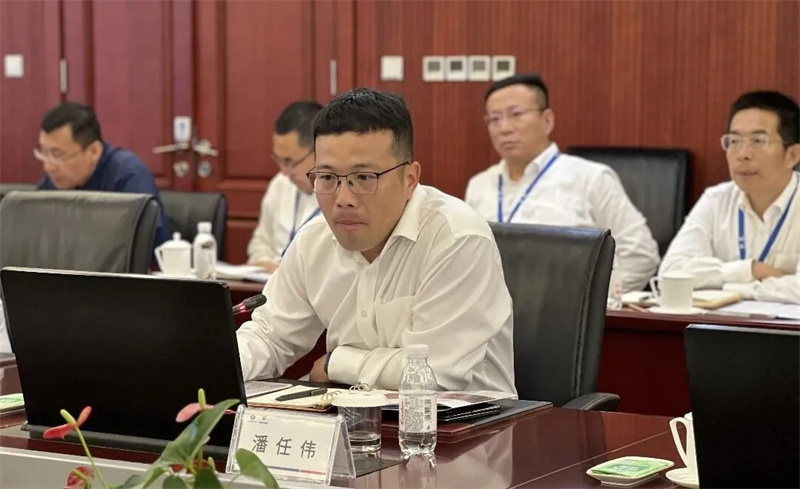
Pan Renwei, Director of SEPCOIII's Technology Center and Dean of the Engineering Technology Research Institute, systematically introduced the company's integrated full-process service capabilities in his thematic report: the company entered the solar thermal sector in 2014, established a dedicated R&D team including 8 postdoctoral researchers, with cumulative R&D investment exceeding RMB 130 million. In collaboration with Zhejiang University and Harbin Boiler Company, the company built test platforms and overcame multiple "chokepoint" equipment challenges in heliostat fields. The company currently holds 200 patents (including 22 PCT international patents), has led the compilation of over 100 industry standards, and undertaken multiple national-level research and development tasks.
In the overseas sector, SEPCOIII has undertaken landmark molten salt solar thermal power plants along the Belt and Road, including Morocco's Noor and South Africa's Redstone projects. Domestically, the company has implemented landmark projects such as the high-altitude Tibet Zabuye project, the Xinjiang Ruoqiang project, the Luneng Haixi multi-energy complementary project, and the Urat national demonstration project, accumulating implementation experience in high-cold, desert, and multi-energy complementary scenarios. Relying on its wholly-owned subsidiary, the company's solar thermal O&M portfolio has reached 1.4 GW, covering mainstream parabolic trough and tower-type power plants. In March this year, the company established an independent solar thermal engineering company, positioning the solar thermal business as the enterprise's second growth curve to align with the large-scale layout of the 15th Five-Year Plan.
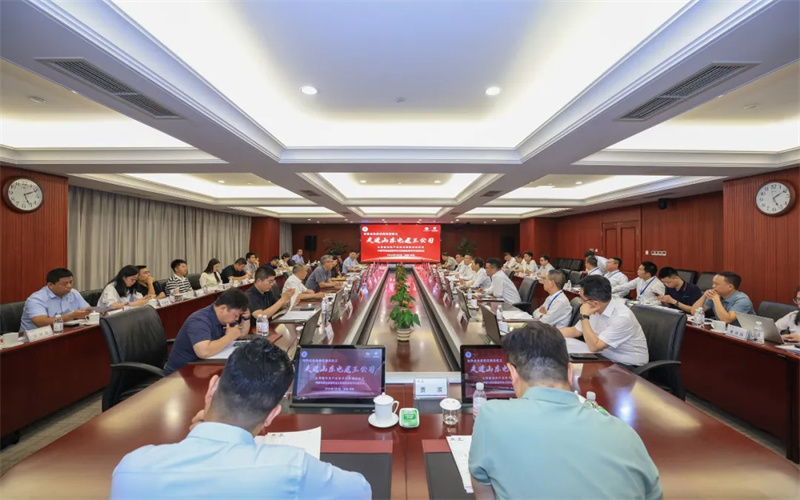
During the discussion session, participants directly addressed industry shortcomings, such as the current solar thermal industry's excessive low-price competition driving up O&M costs, foreign technological monopolies on core equipment, and the disconnect between cutting-edge research and engineering application. Through thorough discussion, consensus was reached to advance equipment localization and technology implementation through upstream-downstream collaboration and industry-university-research linkages. Going forward, the industry should abandon extensive low-price competition, rely on technology iteration for cost reduction and efficiency improvement, implement projects under construction, leverage market-oriented mechanisms, improve the self-controllable industry chain, and accelerate the engineering application of research achievements.
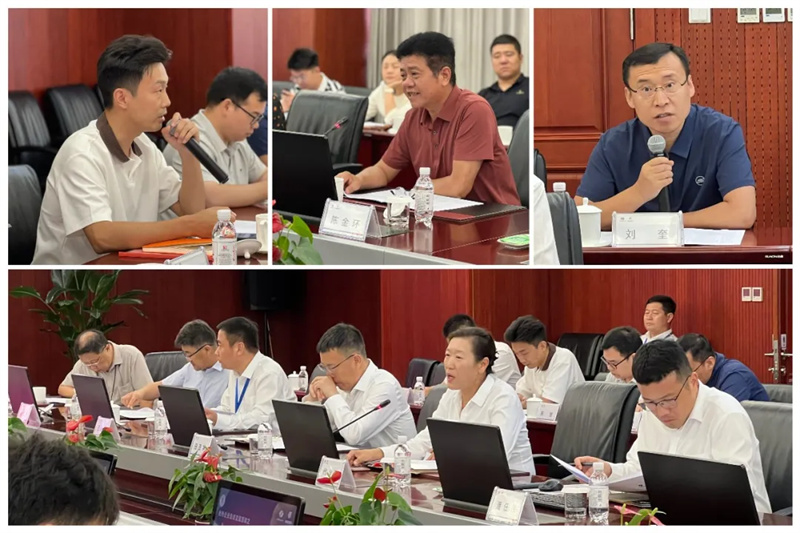
The person in charge of SEPCOIII Solar Thermal Engineering Company also stated that the enterprise will fully open its own test platforms and domestic and overseas project databases, and pursue open cooperation through joint research projects and complete set supply models.
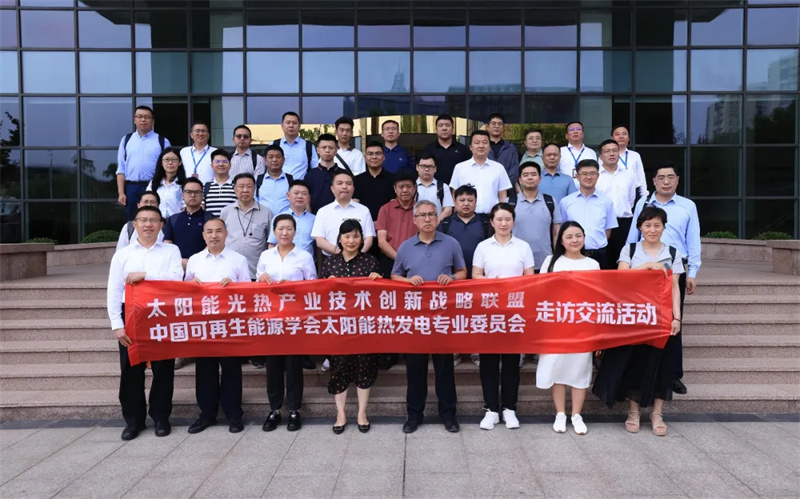
China's domestic solar thermal industry is currently in a critical window period of policy dividends and cost breakthroughs. Going it alone is insufficient to meet the development needs of large-capacity, high-parameter power plants. The industry should abandon zero-sum competition thinking, integrate full-chain resources to jointly break through technological bottlenecks, and seize the large-scale development window of the 15th Five-Year Plan period. As a Category A pilot industry alliance of the Ministry of Science and Technology, CSTA's member visit activities carry multiple values including technology transfer, resource docking, and industry empowerment. The Alliance will continue to build efficient and pragmatic offline exchange platforms, collaborate with the entire industry chain to jointly overcome cost and efficiency bottlenecks, break down technical barriers between upstream and downstream enterprises, and establish industry-university-research collaborative innovation platforms.