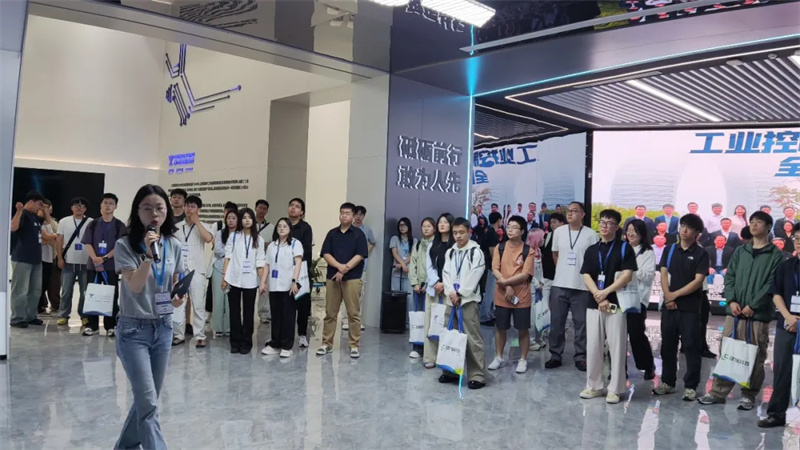
"Before the Western Pass, white egrets fly; peach blossoms float on the stream, mandarin fish grow plump."Over 1,200 years ago, the Tang Dynasty poet Zhang Zhihe composed *Fisherman's Song*, immortalizing the exquisite scenery of Xisai Mountain in Huzhou. Today, this land of enduring cultural heritage has gained new vitality through scientific innovation. On June 6th, the day before China's National College Entrance Examination (Gaokao), the 16th Graduate Forum on Solar Thermal Utilization Science and Technology was held at Xisai Science Valley—a place where poetry and technological innovation converge. Hosted by the China Solar Thermal Alliance (CSTA) and co-organized by Huzhou Institute of Industrial Control Technology, Zhejiang Green Storage Technology Co., Ltd., and ZhongGuanCun XinYuan Solar Thermal Technology Service Center, the forum adopted the theme "My Research, My Innovation" to facilitate technical exchanges on solar thermal utilization. The event attracted over 130 participants, including 50 graduate students from nearly 30 universities and research institutes, Dr. Chen Xiao, Deputy Director of Huzhou Science and Technology Bureau, and more than ten invited mentors.
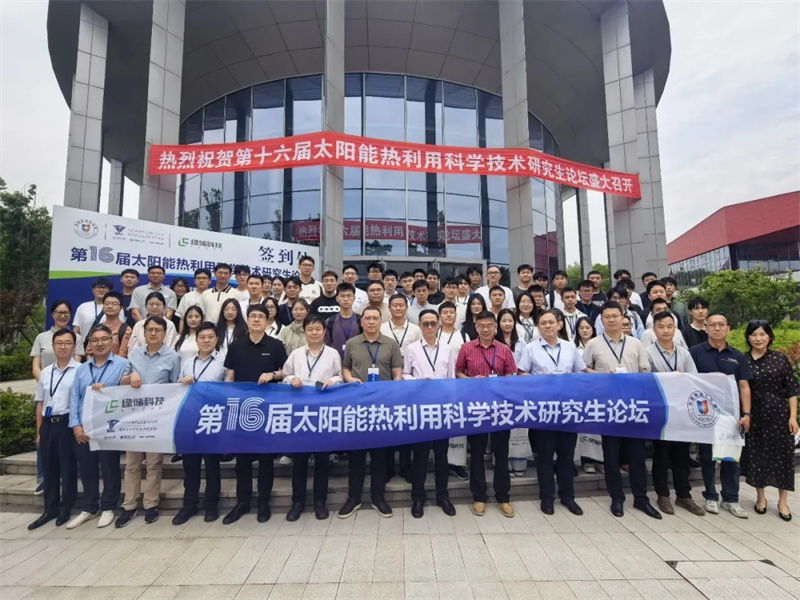
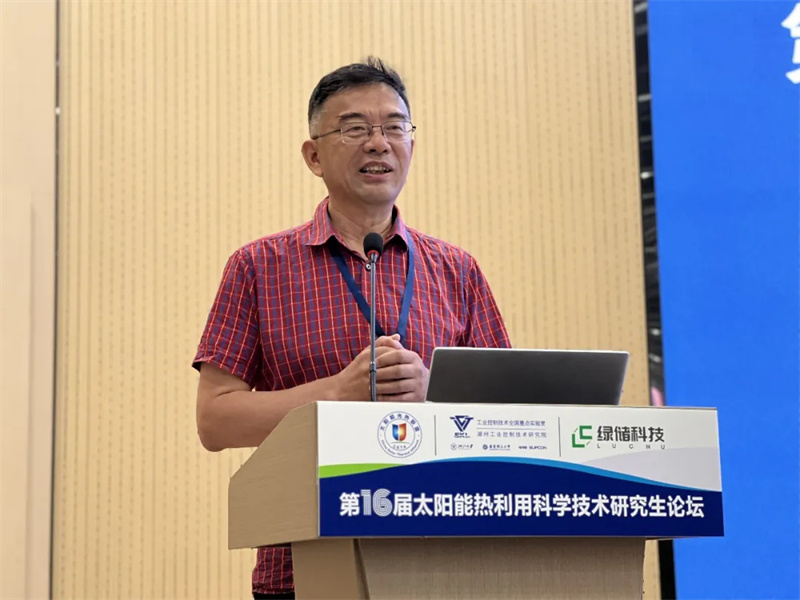
Wang Zhifeng, Chairman of the CSTA and Research Fellow at the Institute of Electrical Engineering, Chinese Academy of Sciences, delivered an address on behalf of the organizer. He expressed gratitude to the forum's organizing units, local government departments, all judges, students from universities across the country, and Cosin Solar Technology Co., Ltd. , the sponsor of the 2026 Defang Scholarship.
Chen Xiao, Deputy Secretary of the Party Group and Deputy Director of Huzhou Science and Technology Bureau, delivered an address promoting Huzhou's scientific innovation and talent environment. As the birthplace of the "Two Mountains" concept , Huzhou ranks among the top in Zhejiang Province in terms of science and technology investment and R&D output, with comprehensive innovation policies and an excellent industrial ecosystem. The State Key Laboratory of Industrial Control Technology, established in Huzhou four years ago, has assembled a research team of over 300 members, established six research institutes, and focused on key areas including industrial control and solar thermal energy storage. It has collaborated with central state-owned enterprises and industry-leading companies to build 14 joint innovation platforms, incubated five technology startups, and formed a complete scientific achievement transformation system, making all-out efforts to tackle major national research projects. He stated that Huzhou will leverage high-quality innovation platforms, abundant industrial application scenarios, and talent policies such as the Taihu Lake Elite Program to attract young talents for entrepreneurship and innovation. He warmly welcomed talents and enterprises to join and stay in Huzhou.
The invited mentor keynote session of this forum was chaired by Professor Zhao Li of Tianjin University, Vice Chairman of the CSTA Expert Committee. Authoritative experts in the industry, including Jin Jianxiang, Research Fellow at Zhejiang University, Director of the State Key Laboratory of Industrial Control Technology, and President of Huzhou Institute of Industrial Control Technology; Fan Liwu, Research Fellow, Tenured Associate Professor, and Doctoral Supervisor at the College of Energy Engineering, Zhejiang University, and recipient of the National Young Talents Program; Li Hongzhi, Chief Expert at XI'AN THERMAL POWER RESEARCH INSTITUTE CO.,LTD, Adjunct Professor at Xi'an Jiaotong University, and recipient of the Chang Jiang Scholars Program of the Ministry of Education; Wang Dengjia, Second-Level Professor and Doctoral Supervisor at Xi'an University of Architecture and Technology, recipient of the National Youth A Project and Young Chang Jiang Scholars Program; and Ju Xing, Professor and Doctoral Supervisor at North China Electric Power University, delivered specialized reports on cutting-edge directions including high-temperature molten salt energy storage, high-power phase change thermal energy storage, photovoltaic surplus power storage heating, carbon dioxide thermodynamic batteries, and spectral-splitting photovoltaic/thermal systems. They shared the latest scientific breakthroughs and provided precise academic guidance for young researchers.
The forum featured substantial academic content and a comprehensive discussion system, with over 50 academic presentations in total, including 5 invited mentor reports and 49 graduate student presentations. The graduate student reports closely aligned with core industry development needs, focusing on three major themes: materials, system technologies, and components and equipment. They collectively demonstrated the innovative vitality and research capabilities of China's young research community in the field of solar thermal utilization. Experts and graduate students engaged in in-depth exchanges and lively discussions on key technical issues such as material performance enhancement, system energy efficiency improvement, core component optimization, and cross-scenario application adaptation, effectively promoting cross-university and cross-disciplinary academic integration and intellectual exchange.