


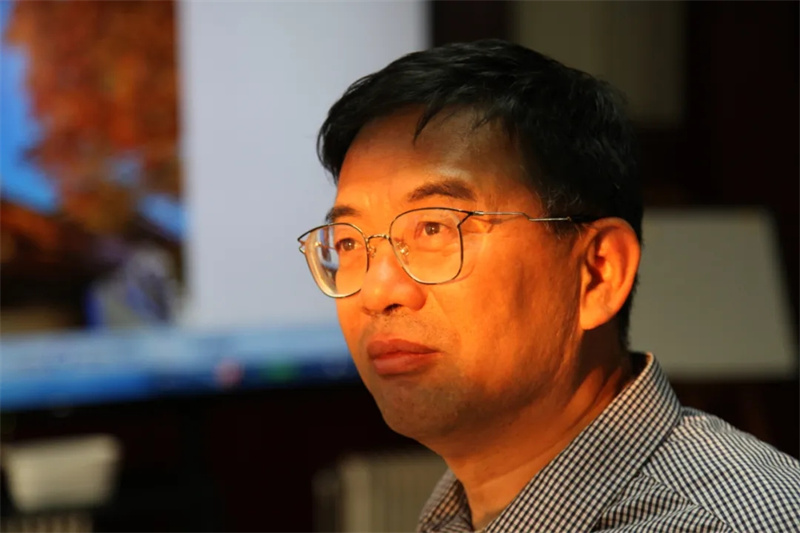
On November 28, 2025, the winners of the China Renewable Energy Society Science and Technology Awards 2025 were officially announced. The Science and Technology Achievement Award—the sole award of its kind nationwide—was presented to Dr. Wang Zhifeng. He is a researcher and doctoral supervisor at the Institute of Electrical Engineering, Chinese Academy of Sciences; Chairman of the China Solar Thermal Industry Technology Innovation Strategic Alliance; and Director of the Solar Thermal Power Generation Committee of the China Renewable Energy Society. This is another prestigious personal honor for him after winning the China Solar Thermal Utilization Outstanding Contribution Award in 2016. It is the highest recognition of his decades of dedication to solar thermal power generation, leading the field in both theory and engineering, and also witnesses China’s growing global influence in the renewable energy sector.
Decades of Deep Cultivation: Targeting Pain Points to Chart the Industry’s Course
Dr. Wang Zhifeng has long been engaged in research on solar thermal power plant system design, flow and heat transfer in high-temperature solar collectors, integrated design of concentrating and heat-absorbing systems, thermal performance evaluation theories of solar collectors, and solar seasonal thermal storage. He has led the construction of China’s first tower-type solar thermal power plant, the world’s first solar-driven supercritical carbon dioxide (sCO₂) thermal power plant, the world’s first concentrating solar kiln for cement and ceramic firing, and China’s first solar seasonal thermal storage project. He also edited the first national standard for solar thermal power generation in China. His current H-index is 58.
His research career has always kept pace with the development of China’s solar thermal power industry. As Vice Chairman of IEA-SolarPACES and other positions, he is both an academic leader and a bridge for technical exchanges between China and the world.
Over decades, he has never stopped exploring:
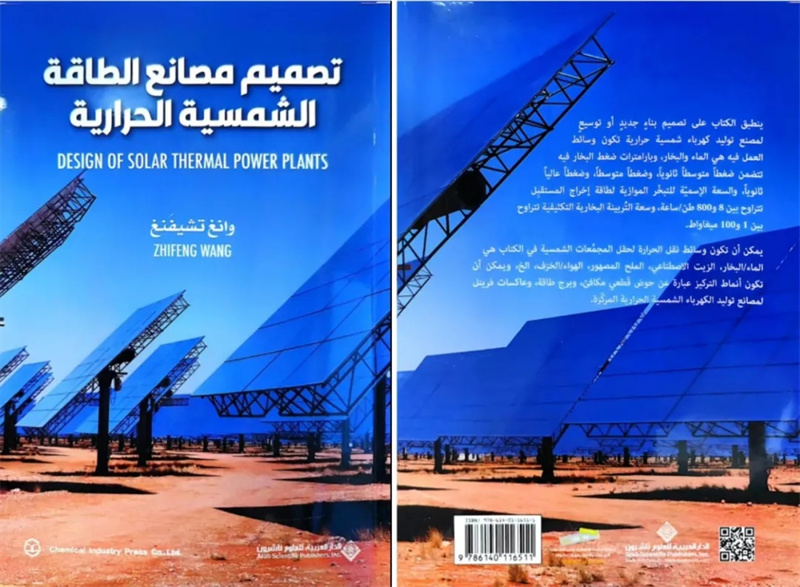
He published the monograph Design of Solar Thermal Power Plants in Chinese, English, and Arabic, bringing Chinese technical standards to the world.
He has published 164 SCI papers by 2025 in solar concentrating power system modeling and optimization, laying a solid theoretical foundation for the industry.
As one of the first selected experts of the National Ten-Thousand Talents Program and a recipient of the Special Government Allowance of the State Council, he has twice been named an Outstanding Doctoral Supervisor of the Chinese Academy of Sciences, passing on knowledge to the new generation of researchers.
All these achievements stem from his persistent efforts to solve a core scientific problem: the coupling of unstable solar-thermal-work conversion processes—the contradiction between the intermittency of solar energy and the stability of energy demand. To address this, he pioneered a technology roadmap for solar thermal power generation and proposed a four-generation technology concept, covering low-temperature to high-temperature applications and single-power generation to multi-scenario utilization, completely reshaping how humanity uses solar energy.
Four Global Firsts: Illuminating Reality Through Engineering Practice
The national standard Terms for Concentrating Solar Thermal Power Generation (GB/T 26972-2011), edited by Dr. Wang Zhifeng, is China’s first national standard in this field. It provides a unified terminology system, laying a key foundation for the standardized development of China’s solar thermal power industry and promoting technological R&D, engineering construction, and industrial growth.
If theory is a lighthouse, engineering practice is the beam that lights up reality. Guided by the belief that scientific research should serve national needs, Dr. Wang led his team to undertake major national projects including the 863 and 973 Programs, delivering four landmark achievements that shocked the industry and redefined the world’s understanding of solar thermal power:
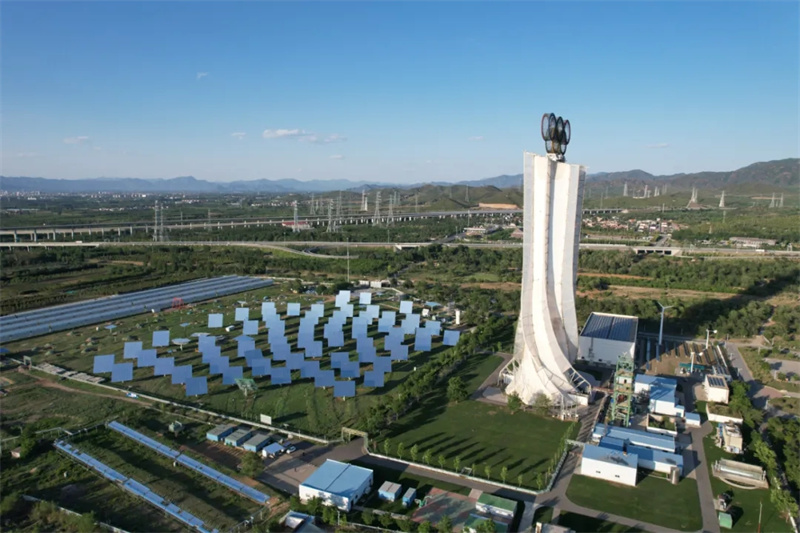
2012: Asia’s First Tower-Type Plant, China’s zero-to-one breakthrough in CSP
When solar thermal technology was still in global exploration, Dr. Wang’s team took the lead in completing the 863 Program project Solar Thermal Power Generation Technology and System Demonstration. They built a 1 MW direct steam generation (DSG) tower-type solar thermal power experimental plant with a 10,000 ㎡ heliostat field. As Asia’s first and the world’s fourth commercially operated tower-type solar thermal plant, it made China one of the countries mastering core solar thermal technologies, accumulating valuable first-hand experience for subsequent industrial development.
2021: Seasonal Thermal Storage—Storing Summer Sunlight to Warm Winter
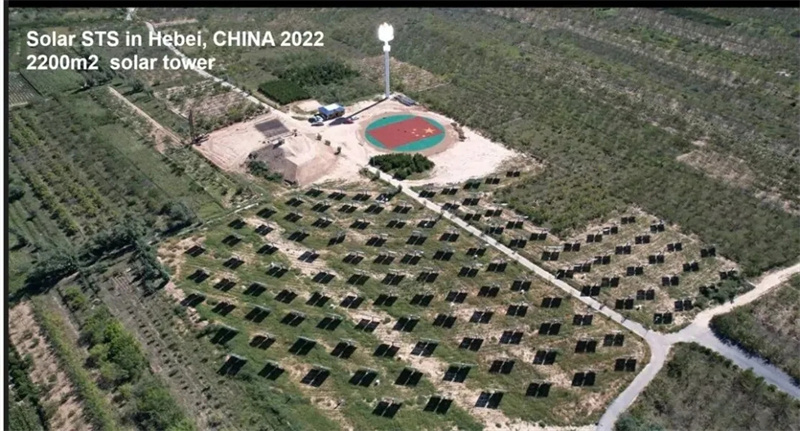
A long-standing challenge in solar energy utilization is insufficient sunlight in winter and surplus in summer. Dr. Wang’s team built China’s first solar seasonal thermal storage project, achieving 210 days of long-term thermal storage and heating for the Dahua Jianguo Hotel in Huangdi City, Zhangjiakou (building area: 47,000 ㎡). Using tower concentrating technology, the system stores summer solar heat in water and releases it on demand in winter—like storing and transporting “sunlight” as a resource. It turns waste into value, reduces carbon emissions effectively, and makes solar heating a reality.
2022: World’s First Concentrating Solar Kiln, Solving Decarbonization Challenges for High-Carbon Industries
Cement and ceramic firing require temperatures above 1,000 ℃ and have long relied on fossil fuels, making them major global carbon emitters. After nearly six years of research, Dr. Wang’s team overcame technical hurdles such as thermal stress control of brittle materials and high-temperature glaze vitrification. They developed a high-temperature solar ceramic kiln using ultra-high-precision flexible solar concentrators. At a sintering temperature of 1,400 ℃ with a temperature control accuracy of ±20℃, the world’s first batch of zero-carbon solar ceramic wares was produced in April 2022. In November of the same year, these solar ceramics were selected by the Ministry of Ecology and Environment as exhibits for the Chinese delegation at the 27th UN Climate Change Conference.

2024: World’s First sCO₂ Solar Thermal Power System, Leading a Technological Leap
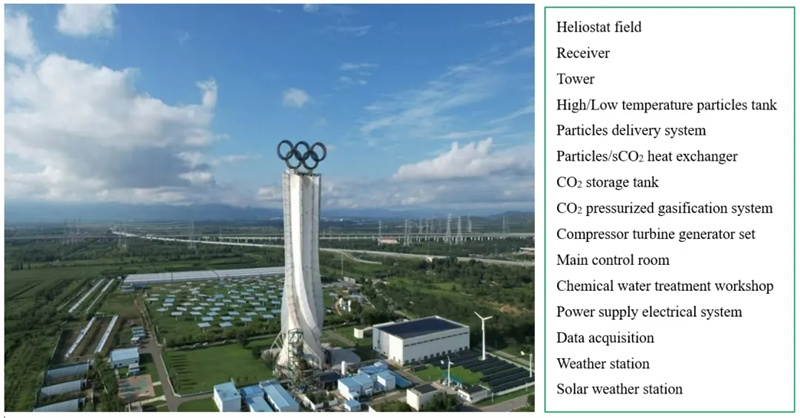
If the first three are breakthroughs, this achievement is a revolution. After five years of R&D, Dr. Wang’s team built the world’s first supercritical carbon dioxide solar thermal power plant using the innovative model of simultaneous research, design, manufacturing, installation, and commissioning. The project was featured by People’s Daily and CCTV. It systematically broke through core challenges in high-temperature heat absorption, heat exchange, and power generation units. It not only advances China’s solar thermal technology toward low cost, high efficiency, and high flexibility but also upgrades industrial chains such as high-temperature materials and precision manufacturing, providing critical support for large-scale new energy base construction.
Dual Roles as Scientist and Educator: Leading Research and Nurturing Talent
As a doctoral supervisor at the University of Chinese Academy of Sciences, Dr. Wang Zhifeng upholds an education philosophy rooted in love for teaching, focusing on grasping essence and integrating knowledge with practice. He never encourages rote memorization of formulas; instead, he guides students to explore the physical meaning and practical scenarios behind concepts, integrating theory with engineering through real research environments.
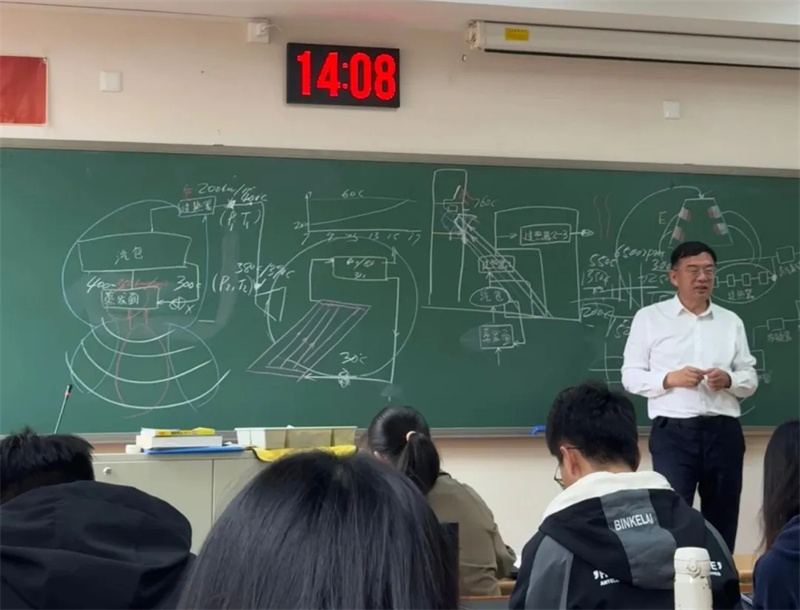
His course Solar Thermal Power Generation Technology stands out for high-quality self-compiled textbooks, in-depth teaching methods, and rich practical sessions. It won the 2024 Excellent Graduate Course award at the University of Chinese Academy of Sciences. Through the model of independent learning → theoretical foundation → practical empowerment, this interdisciplinary course has trained 72 interdisciplinary talents for the new energy sector (54 PhDs and 19 master’s students).
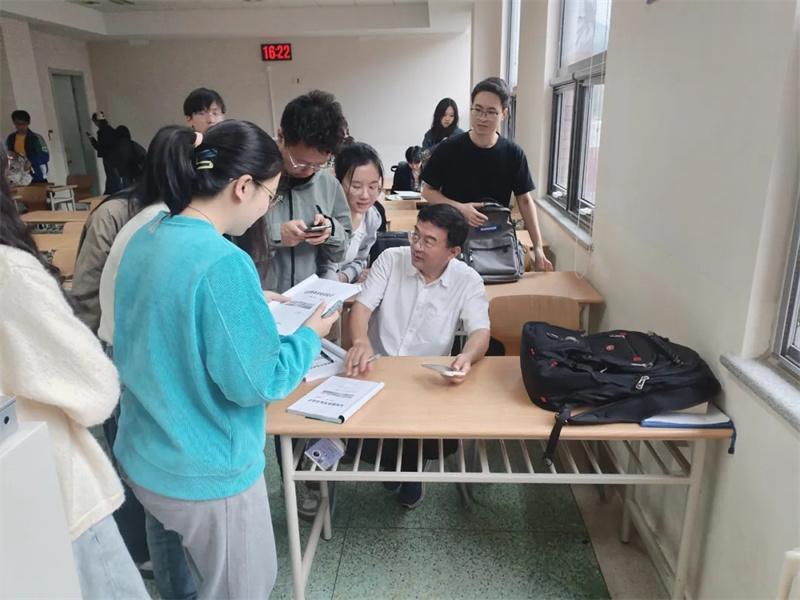
Over decades, he has emphasized four core research virtues: Rigor and truth-seeking as precise as heliostats; Integrity and honesty in academic ethics; Perseverance in tackling frontier“no-man’s-land” problems; Innovation and responsibility to break conventional thinking.
For young researchers, he highlights four key competencies:
Interdisciplinary integration (breaking barriers between materials, thermodynamics, etc.)
Theory-practice transformation (solid fundamentals and practical implementation)
Problem decomposition (targeting core issues to solve difficulties)
Systems thinking (covering the full chain and industrialization)
On facing setbacks in research, he offers sincere advice:
Recognize the value of trial and error, turning failures into optimization evidence
Focus on core problems, simplifying complexity with straightforward thinking
Rely on team collaboration, solving challenges collectively
Stick to long-term value, not being shaken by short-term difficulties
To young people in renewable energy, he gives an inspiring message:
“Every heliostat reflects not only sunlight but also humanity’s pursuit of a clean future. May you keep your original aspiration of integrity, build a solid foundation with rigor, forge ahead with innovation, integrate your ideals into the national ‘dual carbon’ strategy, and inject a steady stream of solar thermal power into sustainable development for humanity!”
Behind the Award: An Energy Revolution for the Future
Dr. Wang Zhifeng’s award not only affirms his personal research career but also reflects the rise of China’s renewable energy industry—from theoretical innovation to engineering breakthroughs, from single applications to full industrial chain upgrading.
Driven by the “dual carbon” goal, solar thermal power—with its cleanliness and stability—is becoming a core force in energy structure transformation. The four-generation technology roadmap proposed by Dr. Wang has long been an industry benchmark. The projects he led not only verified technical feasibility but also built a fully domestic industrial chain, ending reliance on foreign technologies. All this comes from his decades of persistence and innovation.
“The meaning of scientific research is to solve real problems and create new possibilities.”This quote perfectly encapsulates Dr. Wang’s career. From theoretical deduction in labs to power plant construction in deserts, from solving the core coupling problem of solar-thermal-work conversion to leading global technological change, he has devoted decades to turning solar energy from an intermittent energy source into a stable and reliable main energy source, powering the energy revolution in China and the world.