


On April 6, 2026, the CGN Tibet Wumatang 50MW Concentrated Solar Power (CSP) Project—the world's highest-altitude parabolic trough CSP plant—officially broke ground in Wumatang Township, Dangxiong County, Lhasa City. Located at an altitude of 4,550 meters, the project marks the first commercial deployment of China's fully self-developed 8.6-meter large-aperture parabolic trough collector. Equipped with a six-hour molten salt thermal storage system, the facility enables continuous nighttime power generation and flexible peak shaving, providing stable and reliable clean energy support for the Tibet power grid.
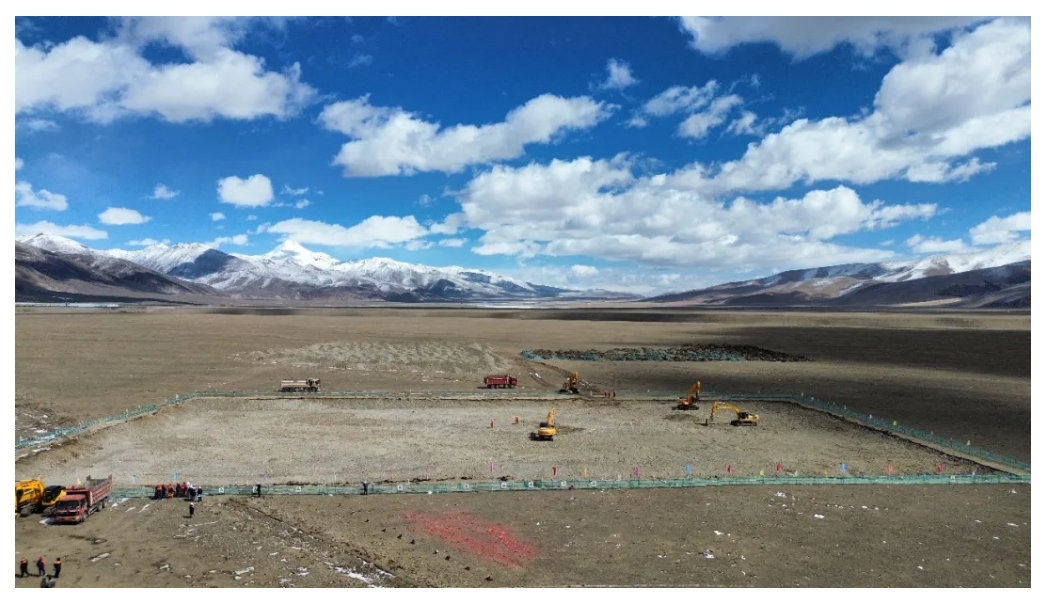
Groundbreaking ceremony of CGN Tibet Wumatang 50MW CSP Project
Utilizing thermal oil parabolic trough technology, the project features a solar collector field covering 242,000 square meters, comprising 68 loops—eight loops employing CGN's self-developed 8.6-meter large-aperture collectors and the remaining 60 loops utilizing 5.77-meter aperture collectors.
Mei Fangquan, Secretary of the Party Leadership Group and Director of the Tibet Autonomous Region Energy Bureau, stated that CSP demonstrates significant potential as a peaking and baseload power source in Tibet. Accelerating CSP development will effectively enhance local power system regulation and support capabilities. He expressed hope that CGN and all participating construction units would anchor their targets on energy security, organize management meticulously, and strive to achieve grid connection and power generation at the earliest opportunity, making positive contributions to Tibet's energy supply security.
"The 8.6-meter large-aperture parabolic trough collector represents the largest commercially deployed aperture size internationally," introduced Hu Guangyao, Secretary of the Party Committee and Chairman of CGN New Energy Holdings Co., Ltd. Compared to the 5.77-meter collector, this model achieves improvements of 18% in concentration ratio and 17.5% in energy flux density, reducing the levelized cost of electricity by 10%. The commercial application of this technology will effectively drive the coordinated upgrading of China's entire parabolic trough CSP industry chain, further consolidating domestic capabilities in key materials and core components. It marks China's leap from technology import to independent innovation in parabolic trough CSP core equipment.
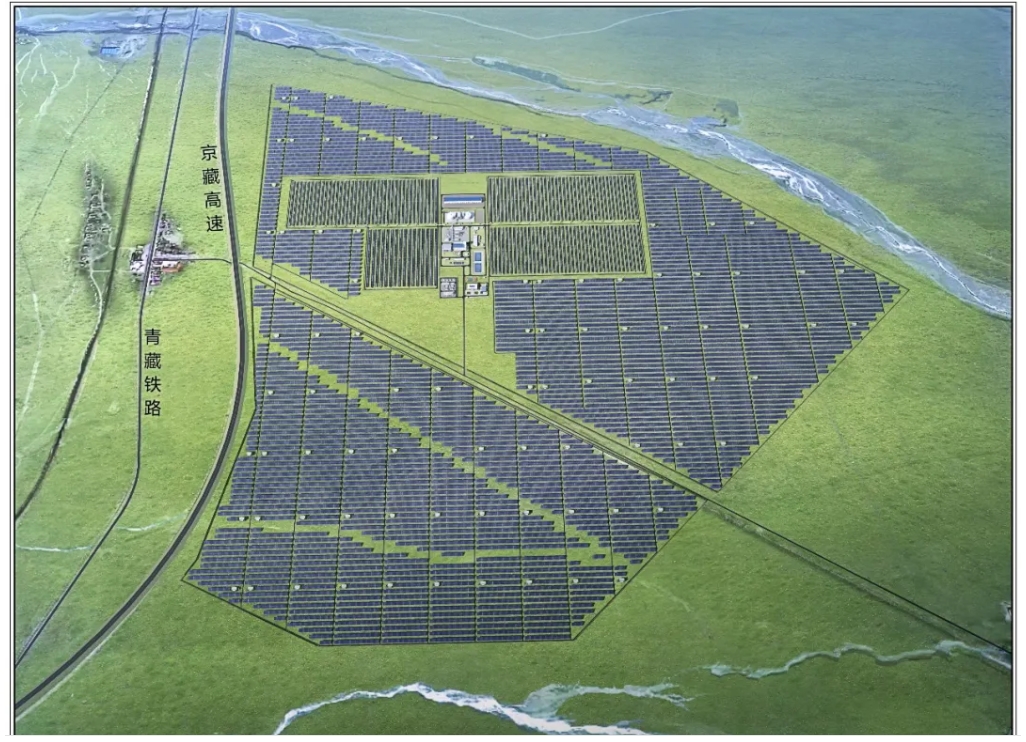
Planning diagram of CGN Tibet Wumatang 50MW CSP Project
Located in a high-altitude, cold, and oxygen-deficient region, the project faces extreme natural conditions including low annual temperatures, large diurnal temperature variations, low air density, and intense ultraviolet radiation. The effective construction period is limited to April through October. In plateau areas above 4,000 meters, construction difficulty and labor efficiency loss increase substantially with every additional 100 meters of elevation. The project team will prioritize the physical and mental health of all construction personnel, installing heating and oxygen supply facilities and equipping a hyperbaric oxygen chamber to fully ensure the health and safety of the construction team and the smooth progress of the project.
Yin Hang, Chief Expert of CGN (CSP Technology), stated that the team has innovatively developed large-aperture trough collector system integration technology. Through specialized designs including high-precision tracking control optimization and high-altitude structural adaptation for wind and cold resistance, the team has successfully overcome industry technical bottlenecks for long-term stable operation in high-altitude environments. The National Energy Research and Development Center for CSP Technology has established a Tibet R&D institution based on this project to tackle key technical challenges and provide services.
The CSP project launched today forms the core component of CGN Tibet Dangxiong Wumatang's "CSP + PV" integrated project. This integrated facility comprises 50MW of CSP and 400MW of photovoltaic generation, scheduled for full commissioning in 2027. The PV project commenced construction in September 2025, adopting a "pasture-photovoltaic complementarity" model to achieve synergistic development of solar power generation and ecological animal husbandry. The CSP project's six-hour molten salt thermal storage system and 20MW electric molten salt heater can absorb curtailed PV electricity, effectively compensating for the intermittency and volatility of photovoltaic generation while meeting peak evening load demands during wet and dry seasons in the local grid. Upon full completion, the integrated project is projected to deliver approximately 719 million kWh of annual grid-connected electricity, equivalently saving approximately 216,900 tons of standard coal and reducing carbon dioxide emissions by approximately 652,300 tons annually.